
Exercise snacks: why two minutes on the stairs count
TLDR
- Exercise snacks are short bursts of vigorous effort lasting one to two minutes: taking the stairs, cycling up a hill, running for the bus.
- Large observational studies using activity trackers link a few of these moments a day to a lower risk of death. That is an association, not proof of cause.
- They don’t replace your training, but they are an easy extra on busy days.
- My rule of thumb: three times a day, move hard enough that talking gets difficult.
On busy days I don’t always get my training in. For a long time I thought a day like that was simply “lost”. Until I read about exercise snacks: very short, vigorous efforts tucked into your ordinary day. I wanted to know whether they really make a difference, or whether it’s just a nice-sounding idea.
What is an exercise snack?
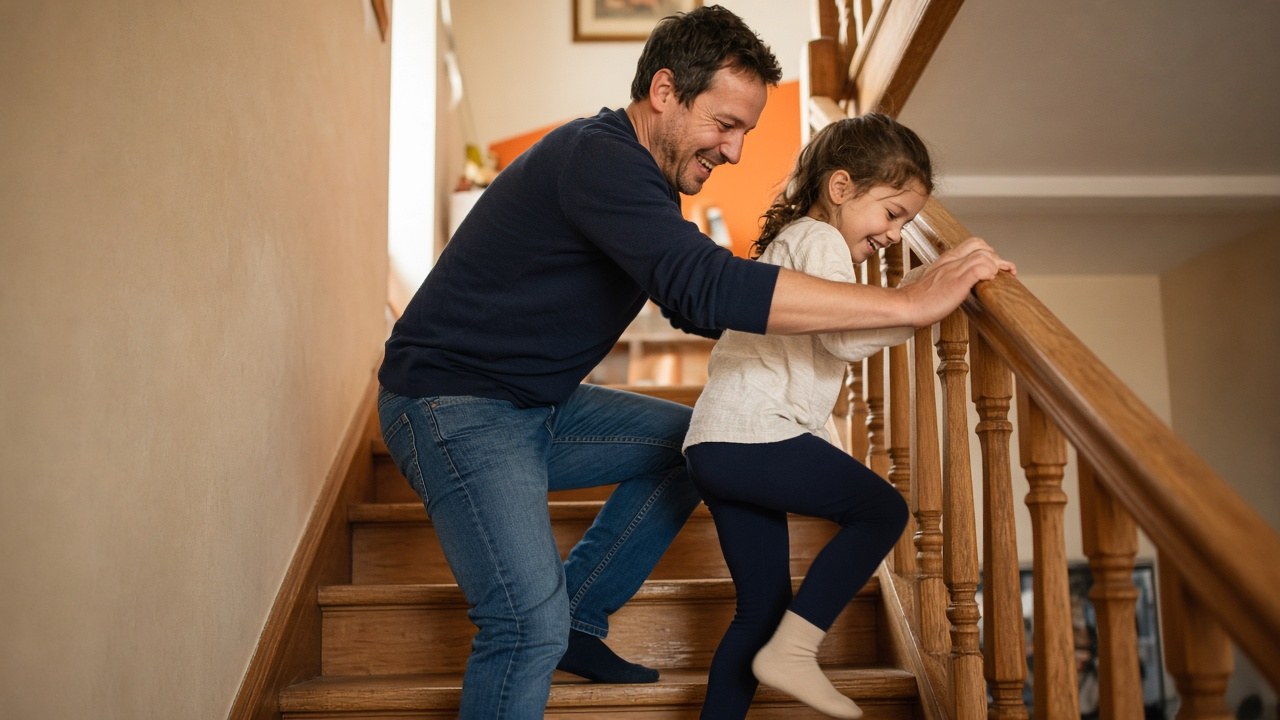
Researchers call it vigorous intermittent lifestyle physical activity, or VILPA for short. In practice: bursts of roughly one to two minutes in which your heart rate climbs noticeably. Think two flights of stairs at a brisk pace, walking up a hill with your shopping, or pedalling hard to make the lights before they change. No sports kit, no gym membership.
What does the research say?
A study in Nature Medicine (Stamatakis and colleagues, 2022) followed more than 25,000 Brits who described themselves as “non-exercisers” and wore an activity tracker. Those who had three short bouts of VILPA a day had a clearly lower risk of death in the following years than those who had none. A follow-up analysis in the European Heart Journal (Ahmadi and colleagues, 2022) pointed the same way for cardiovascular disease.
To stay honest, this matters: these are observational studies. People who often take the stairs may also live more healthily in other ways. The numbers show an association, not a guarantee. What does hold up: small experiments show that repeated brisk stair climbing can already improve fitness a little in untrained people (Jenkins and colleagues, 2019).
How I build them in
- Always the stairs, never the lift, and the last floor at a slightly faster pace.
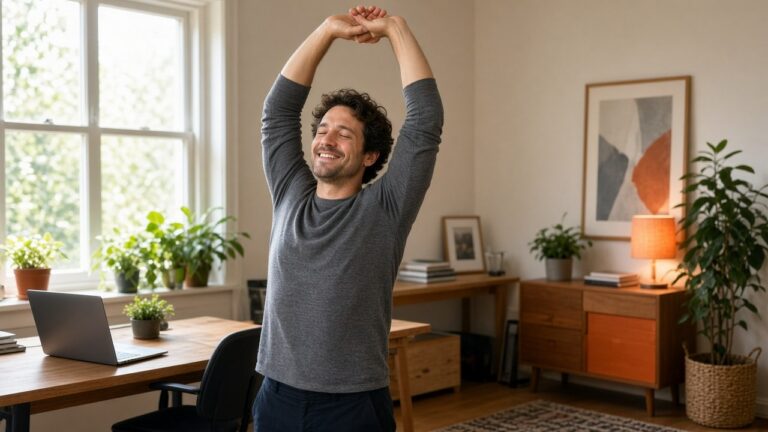
- After a long block of sitting, 20 squats or a brisk walk around the block. I’ve written before about sitting breaks at your desk.
- Cycle or walk to the bakery and push the pace at the end.
- Combine it with my five minutes of morning movement: that’s one snack done before nine.
It feels almost too simple. But that is exactly why I stick with it.
Not a substitute for training
The WHO still recommends 150 to 300 minutes of moderate or 75 to 150 minutes of vigorous activity a week, plus strength work twice a week. Exercise snacks are an addition, not an alibi. They work best on top of enough steps and a few proper training sessions. If you want to know how real intervals work, read my piece on zone 5.
Practical Engy tip
Pick three fixed moments today: the stairs at work, the walk to the car, the evening shopping run. Make each one vigorous for one to two minutes, so that talking gets hard. If you have heart problems or high blood pressure, or you take medication, talk to your doctor first.
Sources (selection)
- Stamatakis E et al. (2022). Association of wearable device-measured vigorous intermittent lifestyle physical activity with mortality. Nature Medicine, 28, 2521–2529.
- Ahmadi MN et al. (2022). Vigorous physical activity, incident heart disease, and cancer: how little is enough? European Heart Journal, 43(46), 4801–4814.
- Jenkins EM et al. (2019). Do stair climbing exercise “snacks” improve cardiorespiratory fitness? Applied Physiology, Nutrition, and Metabolism, 44(6), 681–684.
- Bull FC et al. (2020). World Health Organization 2020 guidelines on physical activity and sedentary behaviour. British Journal of Sports Medicine, 54(24), 1451–1462.


4 Comments