Keeping the bedroom cool: why my core temperature notices
TLDR
- Falling asleep is partly linked to a natural drop in your core body temperature — a room that is too warm works against it.
- I aim for “cool but not cold”: often somewhere around ~16–19 °C, plus fresh air and a blanket that fits — no exact magic number.
- Temperature is a nudge next to fixed times; it does not replace sleep consistency.
- Pair with screen time and sleep and evening meals & sleep.
I first noticed it in summer: window shut, a room that holds the heat, and me tossing and turning while I am “tired enough”. Not always stress, not always coffee — just too warm. Since then I treat bedroom temperature as a simple lever, next to bedtime. No smart-mattress requirement. Just fresh air and a room that does not feel like a radiator.
Core body temperature in one paragraph
Towards the evening your core body temperature drops a little — that is part of your body clock’s signal to fall asleep. A hot, stuffy room makes that drop harder to “feel”. Sleeping cooler does not mean shivering: you want to lie comfortably under a blanket while the air around you is not thick with heat. If you are already working on fixed bed and wake times, this gives you physical support instead of yet another app.
Practical, no gadgets
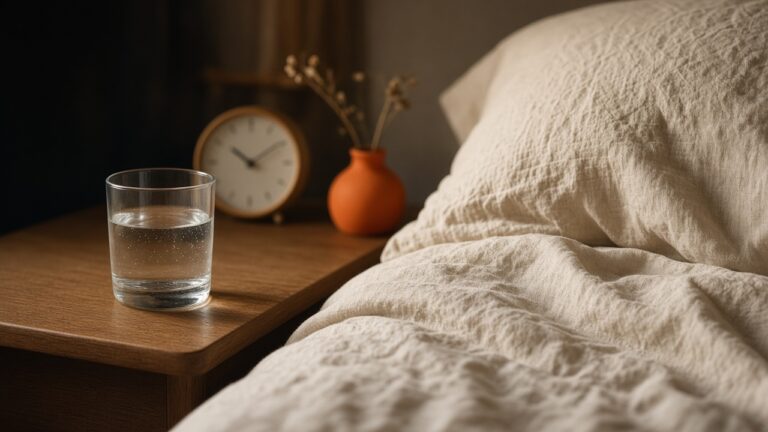
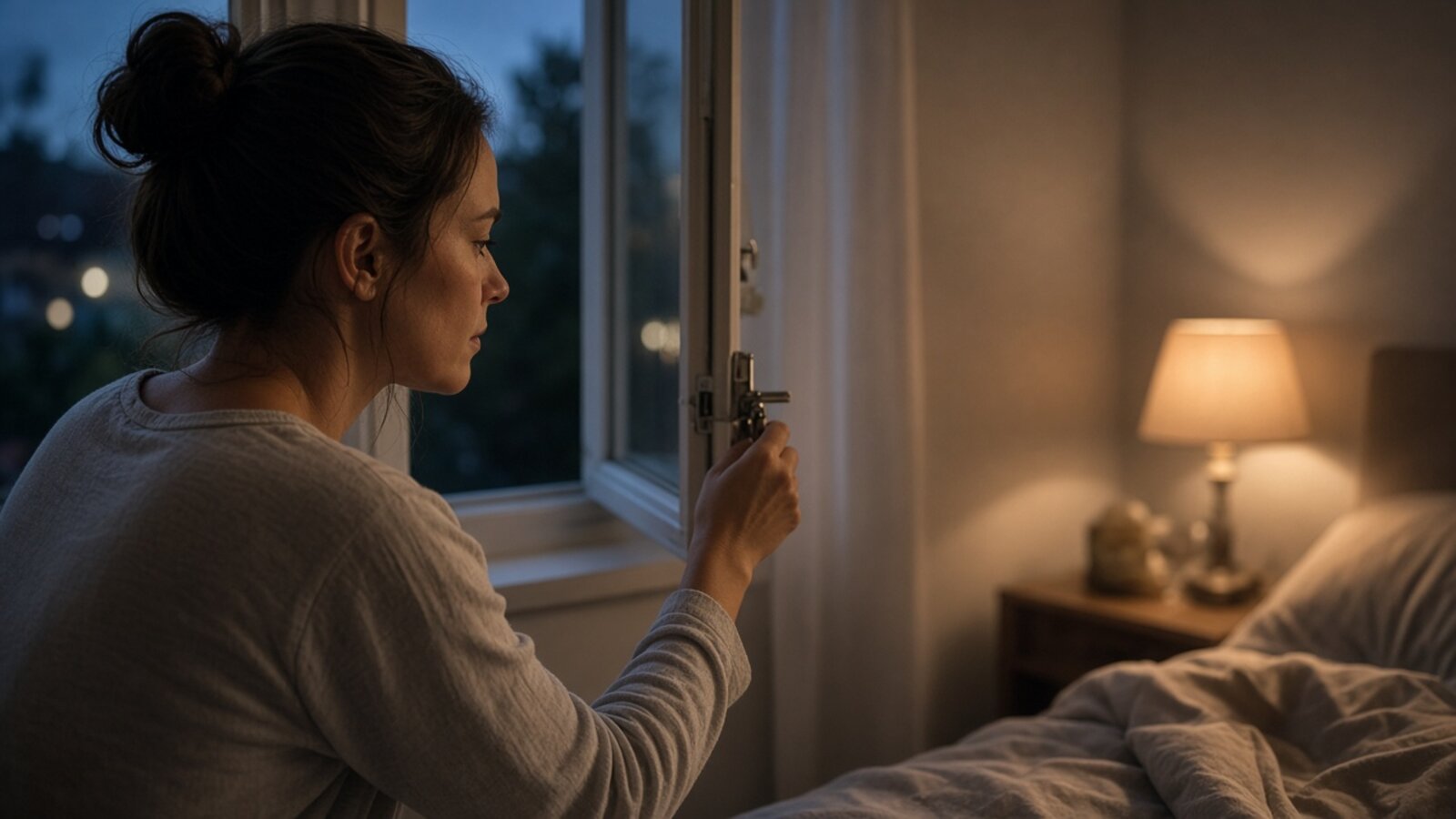
- Ventilation: air the room briefly before bed; on mild nights, window ajar if it is safe and quiet.
- Bedding: rather a blanket you can kick off than sweating under a winter duvet in October.
- Shower: a lukewarm/warm shower followed by cooling down in the bedroom can help — no ice-bath bedtime ritual needed.
- Do not overload: temperature + darkness + reasonable screen habits (& screen-time framework) weigh more than yet another tracker.
What I do not do
I do not chase a perfect 18.000 °C with three thermometers. I check whether I wake up sweaty at 2 a.m. or rather chilly — and adjust blanket/window. A heavy, late or very spicy dinner can also get in the way of falling asleep; that plays alongside temperature, see evening meals and sleep. Temperature is one dial, not an excuse to ignore the rest.
Practical Engy tip
From an hour before bed: let the room cool down (window/thermostat), dim bright lights, phone out of your hand. Note three nights subjectively: time to fall asleep and whether you woke up hot. No spreadsheet — just honest about whether “too warm” was your quiet culprit.
Recommendations in bullets
- Cool and comfortable > tropical under the duvet.
- Core temperature drops in the evening — help it along with air and bedding.
- Consistency first; temperature as support, not obsession.
- Crosslinks: sleep consistency, screen time, evening meals.
Sources (selection)
- Sleep physiology: core body temperature and circadian sleep-onset signals (sleep medicine overview works).
- Practical sleep-environment advice: cool, dark, quiet — as hygiene next to regularity.
- Engy: slaapconsistentie-beter-dan-duur, schermtijd-slaap-herstel, avondeten-slaap-herstel.