
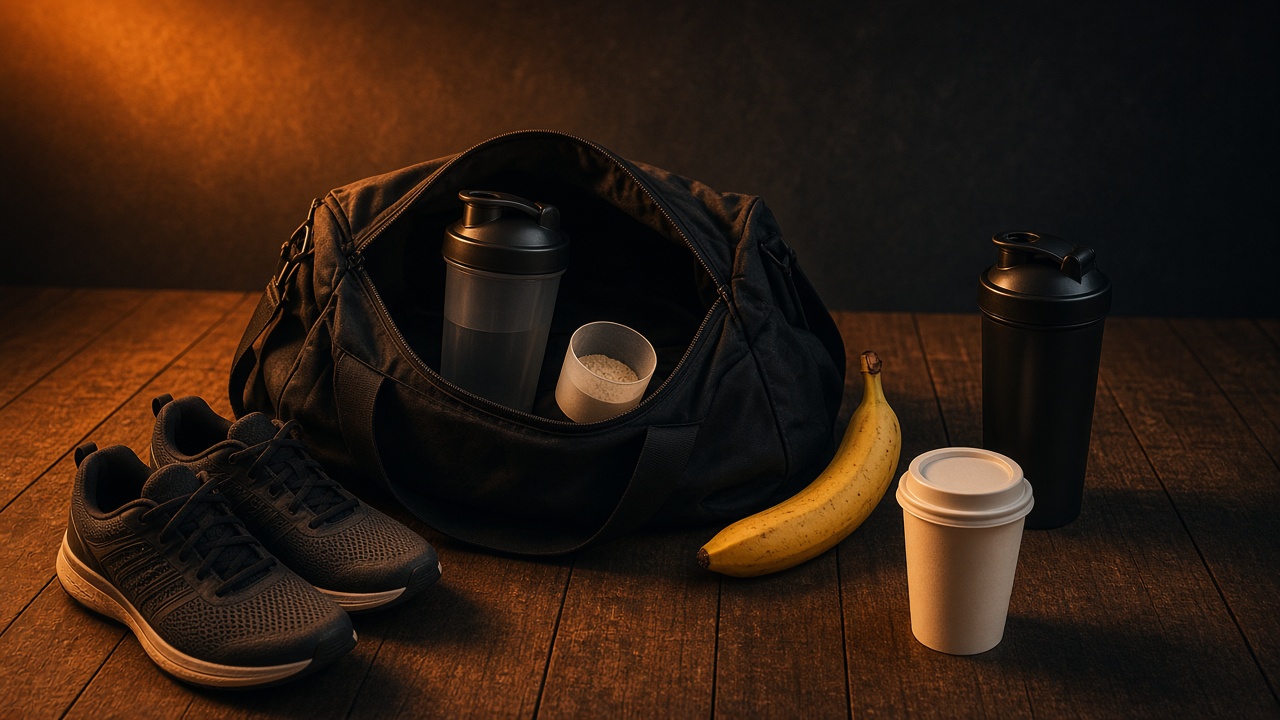
Pre-workout literacy: caffeine, beta-alanine & co without the hype
Disclaimer: This article is informational and not medical advice, not a dosing prescription, and not a product recommendation. For palpitations, anxiety, sleep issues, pregnancy, medication or cardiovascular history: talk to a doctor or pharmacist before caffeine-containing products. No disease claims.
TLDR
- Pre-workout is a category, not magic: often caffeine + buffer/”pump” compounds + flavour. Labels and doses vary widely.
- Caffeine has the strongest sports literature (ISSN); EFSA frames safe bands for healthy adults — not a blank cheque for stacks + coffee + energy drinks.
- Beta-alanine works via weeks of carnosine build-up, not as “one scoop before squats.” Citrulline: interesting, less clear-cut than caffeine.
- Not everyone benefits: late evening gym + poor sleep, or already high caffeine intake, often make the upside zero or negative.
- Palpitations, tremors, panic feeling → stop and talk to a doctor. No SKU advice here.
In the locker room and on Reels, pre-workout looks mandatory: pink powder, “focus mode,” claim that without it you are not training seriously. Too loud. For recreational athletes the more honest question is: what is in it, which ingredient has which evidence, and when is coffee or simply sleeping well the better lever?
Not everyone benefits. Who starts after eight and already has two coffees behind them sometimes buys mainly a worse night — not better sets.
What “pre-workout” often is
A multi-ingredient scoop typically mixes:
| Compound (often) | Marketing role | Literacy lens |
|---|---|---|
| Caffeine | Energy / focus | Most researched for performance |
| Beta-alanine | “Endurance in sets” | Chronic loading, not acute scoop magic |
| L-citrulline / citrulline malate | “Pump” | More promising than many fillers; label doses vary |
| Creatine, tyrosine, taurine, B-vitamins… | Extra claims | Sometimes useful on its own; in a blend often underdosed or surplus to your goal |
Proprietary blends without mg figures make literacy impossible. Read the label for active compounds, not the brand slogan. No brands or SKUs here — this is category education.
Caffeine: the core of the category
The ISSN position stand on caffeine (Guest et al., 2021) supports ergogenic effects at roughly 3–6 mg/kg body weight, often ~60 min before exercise — in studies usually as pure caffeine, not necessarily as a fruit-flavour scoop. Energy drinks and pre-workouts can help, but the dose must add up and stacking with coffee/cola counts.
The European Food Safety Authority (EFSA) (2015) states for healthy adults (not pregnant): single doses up to ~200 mg from all sources raise no safety concerns — including close to intense exercise under normal conditions — and habitual intake up to ~400 mg/day likewise. Single doses around 100 mg can already hit sleep in some people, especially close to bedtime.
Yes: morning or early afternoon session, low baseline caffeine, clear goal (intervals, heavy sets). Not: late evening gym + pre-workout “for the vibe” if sleep is already fragile. Limit: EFSA bands are not a training prescription and not “more is better.” Palpitations, strong unease or insomnia → stop and see a doctor.
Beta-alanine: weeks, not a wow-scoop
The ISSN position stand on beta-alanine (Trexler et al.) ties performance benefit mainly to daily intake over ≥2–4 weeks, so muscle carnosine rises (buffer in efforts of roughly 1–4+ minutes high intensity). A one-off pre-workout dose rarely explains the “better set” you credit to the powder — that is more often caffeine or placebo/expectation.
Tingling (paraesthesia) is known and usually harmless, but annoying. Dose splitting or lower boluses are often mentioned in the literature; I write no personal scheme here.
Yes: who does targeted high-intensity intervals and wants to load chronically. Not: expecting acute “pump” from one scoop before a 45-minute strength hour. Limit: in blends often 1–2 g — under what studies use for saturation.
Citrulline etc.: promise with nuance
L-citrulline / citrulline malate shows up as a “pump” and fatigue compound. Reviews and ISSN overviews place it among the more interesting multi-ingredient candidates, but results are more mixed than for caffeine; effects depend on dose, protocol and study quality. No replacement for progressive overload, sleep or total energy intake.
Other add-ons (tyrosine, agmatine, exotic extracts) deserve scepticism until there are clear doses and repeatable trials. “Not harmful on the label” ≠ “you benefit.”
When yes / not / limits (summary)
Yes to consider (context):
- You want to use caffeine on purpose and can add doses (coffee + scoop + cola)
- Training falls early enough to protect sleep
- You read labels and avoid hidden blends
Not as default:
- “Everyone in the gym does it”
- Compensation for poor sleep or undereating
- Stacking until you tremble “for motivation”
Hard limits:
- Sleep > scoop. EFSA: caffeine close to bed can disturb patterns.
- Cardiovascular signals or panic feeling → professional, not a dose increase.
- Pregnancy, teen use, medication: outside this literacy — doctor/pharmacist.
I deliberately give no product or brand recommendation. Coffee or tea can offer the same caffeine lever without pink-tub theatre.
Recommendations in bullets
- Treat pre-workout as a category: check caffeine mg first, then the rest.
- ISSN for performance evidence; EFSA for safety bands — count all sources.
- Beta-alanine = chronic story; citrulline = possibly useful, not a guarantee.
- Evening gym + fragile sleep? Often better with no late caffeine stack.
- Not everyone benefits; with palpitations or strong side effects: stop + doctor.
Related
Further reading on Engy:
- Creatine & vitamin D: literacy without hype
- Eating around training: timing without dogma
- Hydration & electrolytes
- Magnesium for recreational athletes
Sources (selection)
- Guest, N. S., et al. ISSN position stand: caffeine and exercise performance. Journal of the International Society of Sports Nutrition (2021).
- Trexler, E. T., et al. ISSN position stand: Beta-Alanine. J Int Soc Sports Nutr (2015).
- Kerksick, C. M., et al. ISSN exercise & sports nutrition review update. J Int Soc Sports Nutr (2018) — multi-ingredient / pre-workout context.
- EFSA NDA Panel. Scientific Opinion on the safety of caffeine. EFSA Journal (2015) — ~200 mg acute / ~400 mg/day habitual (healthy adults, excl. pregnant).
- EFSA — caffeine topic overview (summary of safety conclusions, incl. sleep effects around ~100 mg in some).


One Comment