Exercising with a cold: why recreational athletes are better off doing the neck check than sweating it out
General information, not medical advice. If you have a fever, chest pain, palpitations or shortness of breath, do not exercise and ask your GP for advice if in doubt.
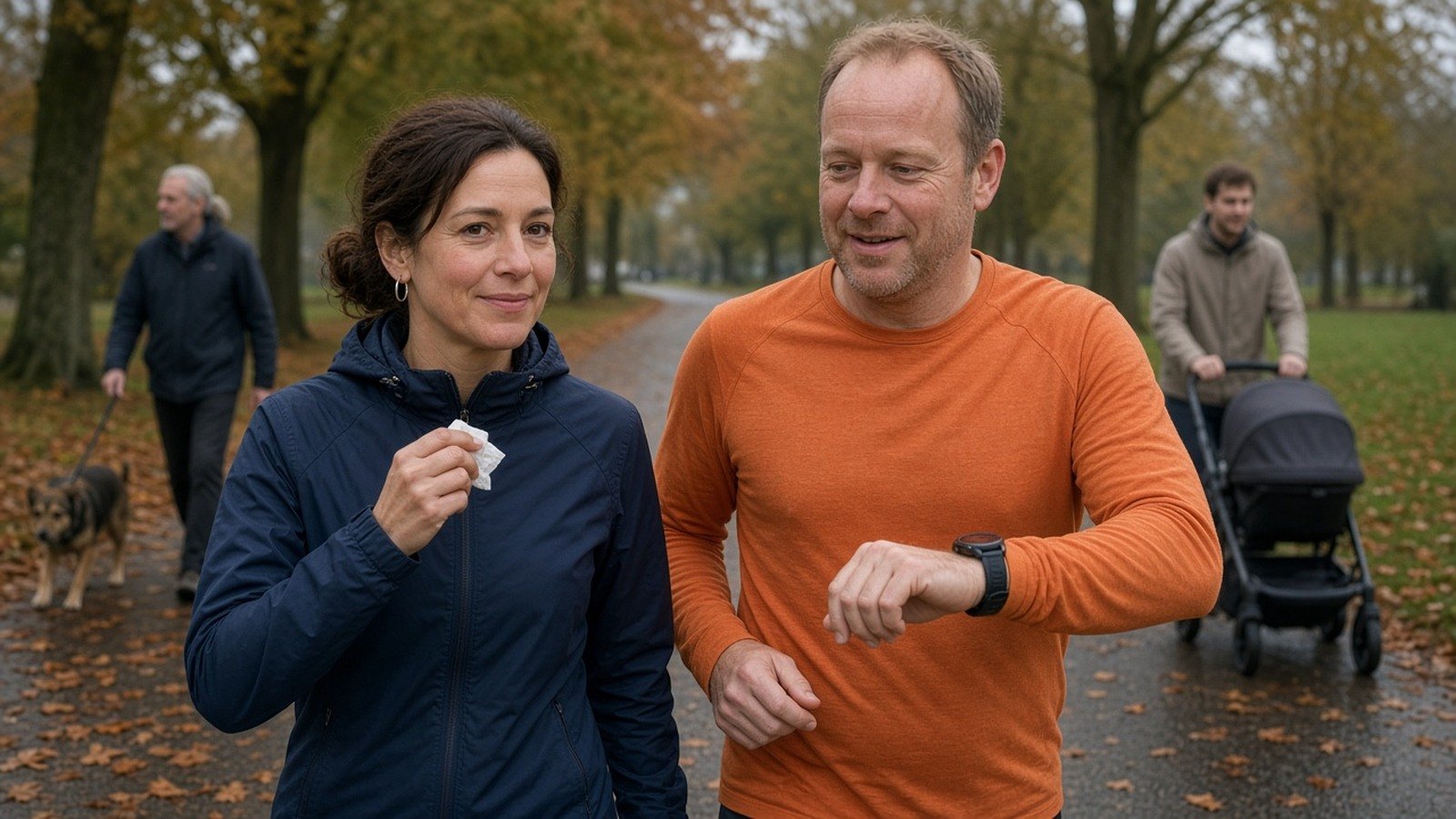
Wondering whether exercising with a cold is still fine? With a mild cold and few symptoms you can keep moving gently, at a lower intensity and preferably on your own, so you do not infect anyone. That is the advice of Gezondheid en Wetenschap, the Flemish health website of the Belgian Centre for Evidence-Based Medicine (Cebam), which summarises scientific evidence for the public. With the neck check you can quickly decide whether to train today.
Exercising with a cold: how the neck check works
The neck check is a simple check of where your symptoms are. If they are only above the neck, such as a runny or blocked nose, earache or a sore throat, and you have no fever, you can exercise. Take it easy for the first 2 to 3 days: exercise for 10 to 15 minutes at a light to moderate intensity and carry on gently if your symptoms do not get worse. If your symptoms are also below the neck, such as coughing, shortness of breath or muscle aches, you do not exercise.

If you feel generally unwell or have symptoms in your lower airways, such as a deep cough or wheezing, it is better not to train, or only lightly, until you feel better. Skip a race or a hard interval session, in which you alternate short, hard efforts with rest breaks, for the first 2 days of a starting cold.
Why fever and exercise do not mix
With a fever the rule is clear: you do not exercise. According to Gezondheid en Wetenschap, rest is absolutely necessary with a fever of 38°C or higher and also when your resting heart rate is more than 10 beats above normal. Your resting heart rate is the number of times your heart beats per minute when you are at rest. How to measure it and what a rise can mean is covered in the article on measuring your resting heart rate.
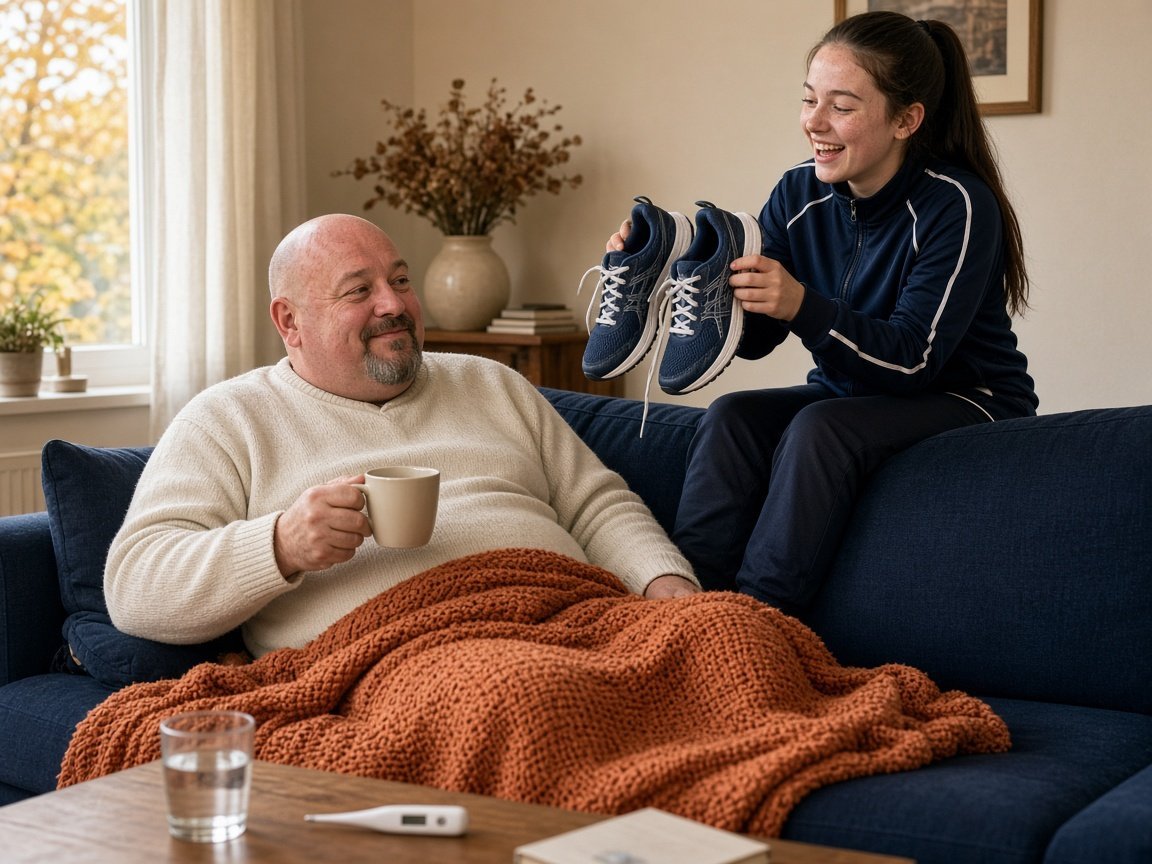
Exercising with a fever raises the risk of heart rhythm disorders and inflammation of the heart muscle. With inflammation of the heart muscle, the muscle that pumps blood around your body becomes inflamed. With a heart rhythm disorder, your heart beats irregularly. If you feel ill, even without a fever, wait until you feel better.
How to build up again after a fever
Once the fever has gone, wait a few more days before gently starting again. A good rule of thumb is to take as many days of rest as the number of days you had a fever. How your body recovers after exercise is explained in the article on recovery within 24 hours.

Why sweating out an illness is a myth
Gezondheid en Wetenschap calls the idea of exercising anyway to sweat out the illness a myth. The effect of a training session is negligible as long as you are still ill. There is even a greater chance of overtraining, because your sick body cannot yet handle the training load. On top of that, it weakens your immune system, so you may stay ill for longer and become more vulnerable to another illness.
What research says about exercise and colds
A Cochrane review from 2020 pools 14 randomised studies with a total of 1377 adults. In such studies a draw decides who exercises and who does not. Regular exercise did not reduce the number of respiratory infections, nor the number of sick days per infection. In 2 studies symptoms were milder and in 4 studies there were fewer sick days over the whole follow-up, but the certainty of the evidence is low.
A small American study from Ball State University in 1998 deliberately infected young adults aged 18 to 29 with a cold virus. Of them, 34 exercised under supervision every other day for ten days, for 40 minutes each time. Another 16 did not exercise. How severe the cold was and how long it lasted did not differ between the two groups. The study is small, old and limited to young people.
According to Gezondheid en Wetenschap, regular exercise does not protect you against a respiratory infection. What vitamin C for colds does and does not do is another story.
How to decide today
- If your symptoms are only above the neck and you have no fever, you can do some light exercise.
- With a fever of 38°C or higher, or a resting heart rate more than 10 beats above normal, you rest.
- Preferably train alone, wash your hands regularly and cough into your elbow.
Sources
- Finoulst M. Sporten met een luchtweginfectie: do’s en don’ts. Gezondheid en Wetenschap (Cebam), 19 January 2026 (in Dutch).
- Boonen S. Mag je sporten als je een infectie hebt? Gezondheid en Wetenschap (Cebam), 6 August 2018 (in Dutch).
- Grande AJ, Keogh J, Silva V, Scott AM. Exercise versus no exercise for the occurrence, severity, and duration of acute respiratory infections. Cochrane Database of Systematic Reviews, 2020 (systematic review of 14 randomised studies).
- Weidner TG, Cranston T, Schurr T, Kaminsky LA. The effect of exercise training on the severity and duration of a viral upper respiratory illness. Medicine & Science in Sports & Exercise, 1998 (experimental study, Ball State University).