What is the healthiest fruit? What large studies say about variety and berries
General information, not medical advice. If you have symptoms or follow a diet for medical reasons, discuss it with your GP or dietitian.
Search for the healthiest fruit and you quickly land on lists of superfruits. Large studies on fruit and healthy ageing point another way: amount and variety matter more than one exceptional fruit. Here is what they found, and which fruits stand out a little.
Why the healthiest fruit does not exist
In 2017 researchers at Imperial College London pooled 95 studies in a meta-analysis, a study that combines the results of many others. The more fruit and vegetables people ate, the lower their risk of cardiovascular disease and early death, up to about 800 grams a day, the highest intake studied. Per type, apples, pears and citrus did slightly better, but whether those fruits themselves make the difference is uncertain. The effect came mainly from the total amount.
A large 2021 analysis in the journal Circulation followed more than 100,000 Americans for up to 30 years and combined it with 26 other studies. The lowest risk of death came with about five servings a day: two of fruit and three of vegetables, a 13 percent lower risk than with two servings. Beyond five servings the extra gain was small. Fruit juice was not linked to a benefit, and neither were potatoes.
These studies follow large groups and show links. People who eat a lot of fruit often move more and smoke less; researchers adjust for this, but not perfectly.
Berries, apples and citrus stand out
When certain fruits do stand out, researchers suspect polyphenols play a role. That is a hypothesis, not a proven explanation. Polyphenols are natural plant colours and compounds such as the blue and purple pigments in berries. In an analysis of three US cohorts published in the British Medical Journal, blueberries, grapes and apples were linked to a lower risk of type 2 diabetes. Berries are not a miracle cure, but they deserve a place next to apples and pears.
The article on antioxidant timing in endurance sport explains why fruit in normal amounts stays fruit, not a pill.
Vary, including by colour
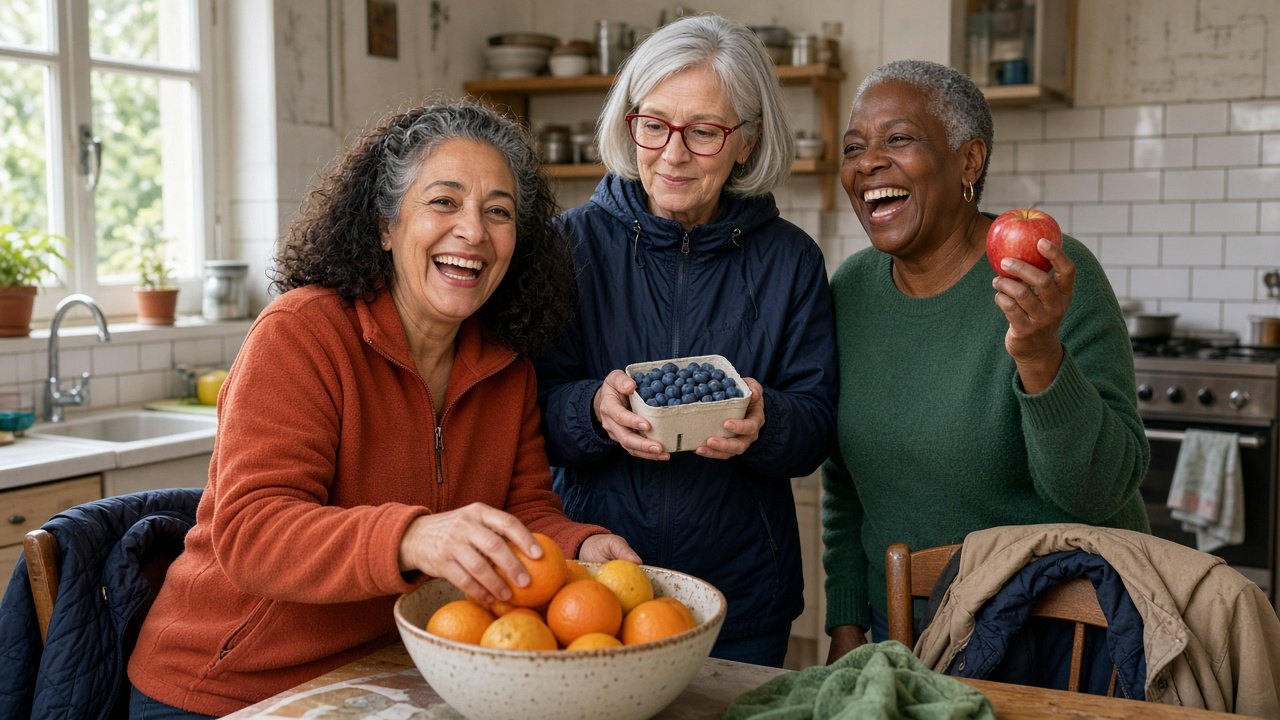
The Vlaams Instituut Gezond Leven advises varying between seasonal fruits. Thinking in colours is an easy way to do it, as each colour brings other compounds.
- Red and blue: strawberries, raspberries, blueberries and red grapes.
- Orange and yellow: oranges, mandarins, mango and apricots.
- Green and pale yellow: green apples, pears and kiwis.
According to Gezond Leven, frozen berries without additions also belong to the fruit to choose often, handy in winter.
Fruit as part of a wider diet
Fruit works best in a mostly plant-based diet. The Mediterranean diet, rich in vegetables, fruit, pulses, nuts and olive oil, is a good example. Read the article on the green Mediterranean diet, or pair your fruit with a handful of nuts a day. Two pieces of fruit a day, switching varieties each week: that is a realistic goal.
Sources
- Aune D et al. Fruit and vegetable intake and the risk of cardiovascular disease, total cancer and all-cause mortality. International Journal of Epidemiology, 2017;46(3):1029–1056.
- Wang DD et al. Fruit and vegetable intake and mortality. Circulation, 2021;143(17):1642–1654.
- Muraki I et al. Fruit consumption and risk of type 2 diabetes. BMJ, 2013;347:f5001.
- Fruit. Vlaams Instituut Gezond Leven (Flemish Institute for Healthy Living), accessed 25 October 2026.