Mobility or long stretching before lifts? What I actually do
TLDR
- Long static stretching right before heavy lifts can sometimes lightly dampen acute strength/power — not dramatic, but awkward if you chase PRs.
- Dynamic mobility that looks like your exercise (hip opening for squat, scapula for press) feels like a better “start button” for me.
- Static stretching fits better after the session or on quiet moments, not as a fixed pre-lift ritual of five-minute hamstring holds.
- Pair with RPE feel, progressive overload and 90–120 min strength/week.
For years I thought “a good warm-up” meant: stretch a muscle as long as possible until it pulls. Handy for feeling loose — less handy when I then want to hit a heavy squat. What I do now is simpler: get warm briefly, then movements that look like what I will lift. No half-hour foam-roller theatre, but targeted mobility.
Static stretching before lifts: what jars
Static stretching = holding a position (often 30–60+ seconds). For long-term flexibility that can have a place. Right before maximal or near-maximal sets, reviews more often show that acute strength or explosiveness dips a bit — not dramatic for everyone, but a reason not to use it as the default “pre-PR protocol.” If you mainly want to feel whether your set is heavy enough, RPE literacy helps more than a stretch session that makes you “loose” but also feel softer.
When static does fit
- After training, if you really want to work a tight zone.
- On a quiet day or in the evening, away from heavy sets.
- With a limitation that blocks a lift position — then short and targeted, not “stretch everything a bit.”
Dynamic mobility that looks like your lift
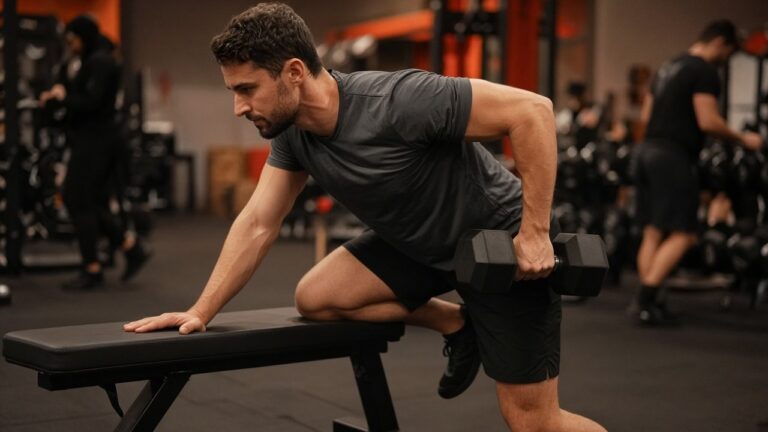
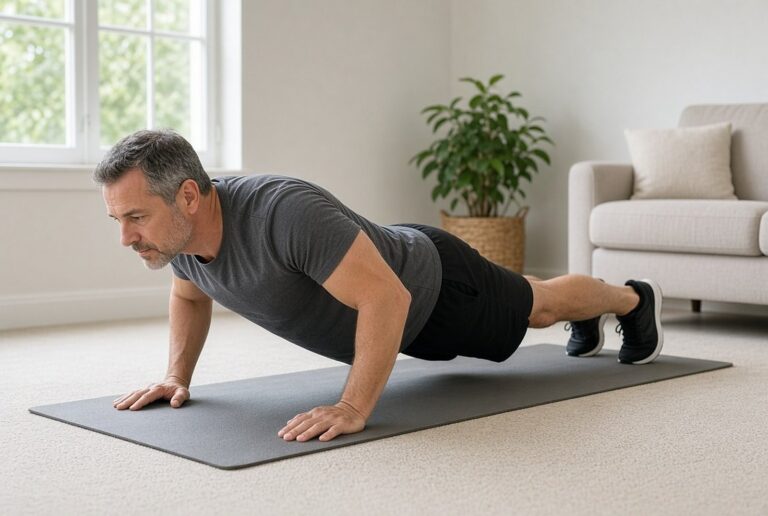
Think controlled bodyweight squats, light hip airplanes, leg swings, band pull-aparts, empty-bar sets. Goal: joints through the range you will load, blood flow up, nervous system “on.” That also fits how you build overload without a spreadsheet: small, repeatable signals instead of a loose ritual.
For me five to ten minutes is enough: general warmth (bike/row or a quick walk-in), then 2–3 movements that belong with the main lift, then warm-up sets. If you already sit around 90–120 minutes of strength per week, you do not need to turn the warm-up into a second workout.
Practical Engy tip
Pick one “key mobility” per main lift: squat → deep goblet or air squat with pause; hinge → hip hinge with stick; press → scapula + empty press. Do those 2×8 controlled. Skip the five-minute still hamstring hold right before your top set — save that for afterward if it really helps you.
Recommendations in bullets
- Dynamic and lift-specific before; static more after or separate.
- Warm-up sets are mobility too — do not skip them for “one more stretch.”
- No yoga-guru stack needed; be honest about what actually limits your range.
- Crosslinks: RPE, progressive overload, strength minutes/week.
Sources (selection)
- Reviews on acute effects of static stretching on strength/power (sport science).
- Practical warm-up guidelines: general warmth + specific prep + warm-up sets.
- Engy: rpe-literacy-training-gevoel, progressieve-overload-zonder-spreadsheet, kracht-90-120-minuten-week.