
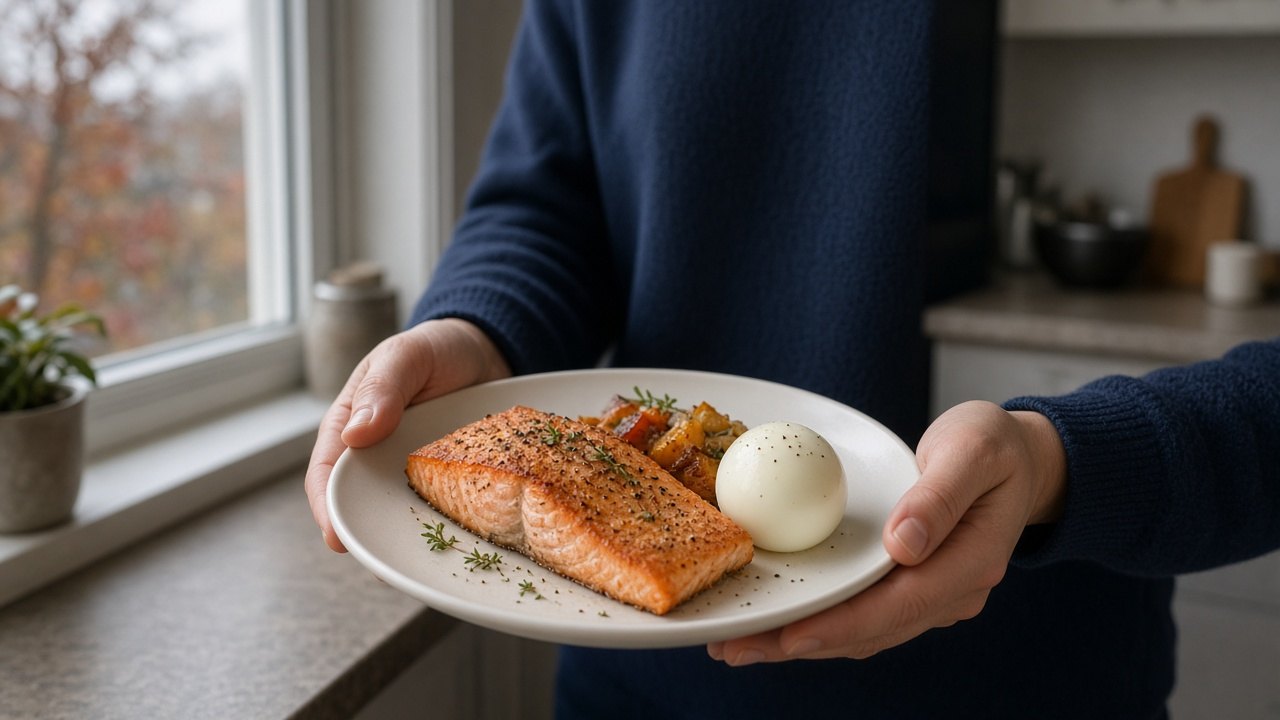
Vitamin D in autumn: what Sciensano and the SHC outline (no dosing advice)
Informational, not medical advice. No dosing advice.
TLDR
- Sciensano and the Superior Health Council note that at our latitude, autumn/winter sunlight often yields too little vitamin D via the skin.
- Food (fatty fish, eggs, fortified products) helps, but alone often falls short for many people — literacy, not an “everyone must supplement” sermon.
- I read HGR/Sciensano as a frame: risk groups and season matter; individual decisions belong with a doctor/pharmacist, not a blog.
- This piece gives no mg or IU prescription; if unsure: blood work and professional advice.
Every October the same headlines return: “deficiency”, “sunshine vitamin”, “should you supplement?”. I want to filter that noise. On Engy we already have vitamin D for athletes by season and broader creatine and vitamin D literacy. This piece zooms into the autumn frame for non-athletes: what institutes write, what food does, and where I stop self-diagnosing.
What Sciensano and the SHC outline
Sciensano (Belgian public-health institute) explains that vitamin D is mainly made in the skin under sunlight, and that this route is often insufficient in winter months at our latitude. Food contributes (fatty fish, eggs, some mushrooms, fortified foods), but intake from food alone is limited for many people.
The Superior Health Council publishes dietary recommendations where vitamin D has a place, with attention to age and higher-risk situations. I do not repeat doses here as personal advice. Anyone applying numbers does so with a doctor or pharmacist — labels and lab values differ per person.
What I do in practice
- Keep seeking daylight (walk, break) — not as an “October D factory”, but as a general routine.
- Keep fatty fish in the weekly menu — in line with omega-3: fish first.
- Only consider a supplement after reading the HGR/Sciensano frame and talking it through — never from one viral reel.
- No megadoses “just in case”: fat-soluble vitamins stack differently.
Literacy limits
Low lab values, bone issues, malabsorption, darker skin with little sun exposure, interfering medication: medical conversations, not a blog checklist. “Everyone is deficient in October” is too blunt — season raises the risk of lower status, it does not replace individual context.
This article is informational and not medical advice. No diagnosis, no dosing prescription. See a doctor or pharmacist about your own status or supplements.
Sources (selection)
- Sciensano. Vitamin D / micronutrients. sciensano.be.
- Superior Health Council of Belgium. Dietary recommendations for Belgium.
- Engy: vitamin D athletes-seasons; creatine & vitamin D literacy; omega-3 fish first.



One Comment